Common SEO Mistakes That Are Hurting Your Rankings (And How to Fix Them)
After reviewing hundreds of websites, our team sees the same SEO mistakes over and over — here is a clear-eyed rundown of what they are and how to correct them.
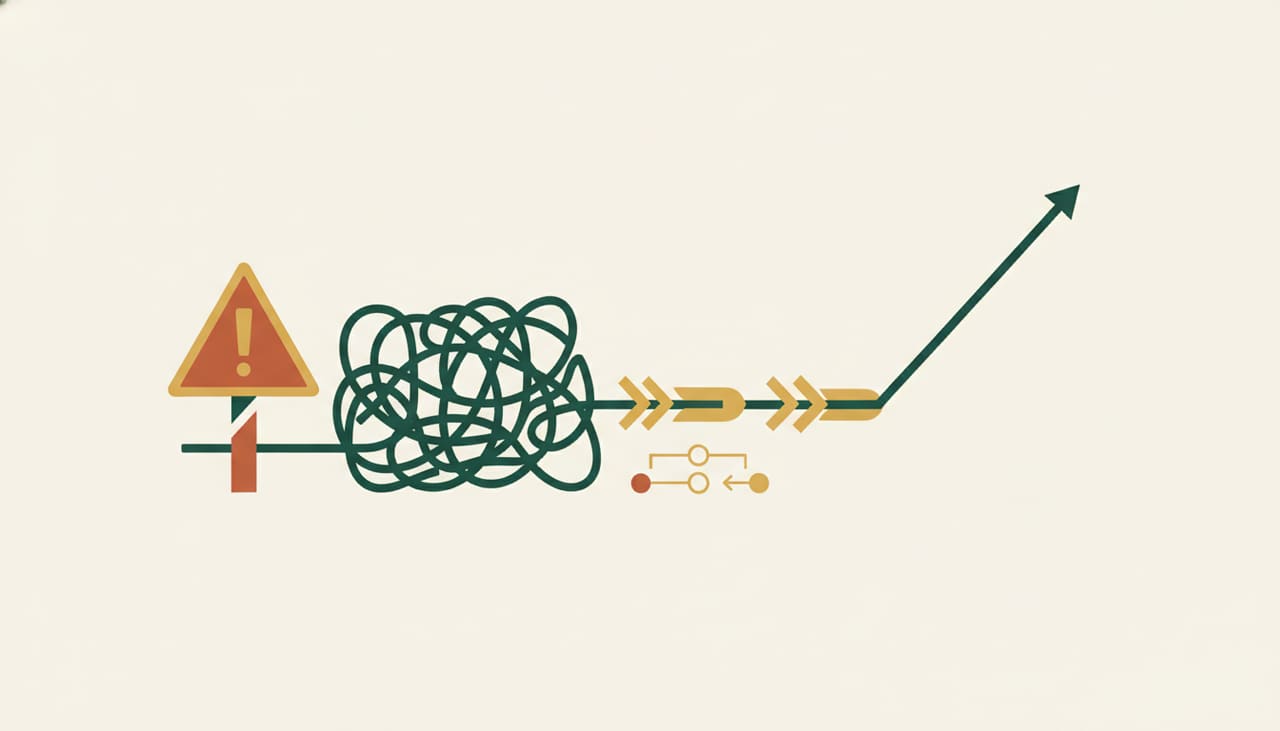
When a site is not ranking, the instinct is often to add more — more content, more keywords, more backlinks. But in our experience auditing local business websites, the most common problem is not absence of the right tactics. It is the presence of mistakes that are actively working against the site.
Fixing the wrong things is faster than building new ones. Here are the SEO mistakes we see most consistently, and what to do about each one.
Targeting the Wrong Keywords
This is the most foundational mistake — and the most costly. A business optimizes for keywords it thinks are important, rather than keywords its actual potential customers use. The result is pages that rank for queries no one searches, or that try to rank for queries with competition far beyond the site's authority level.
The fix is proper keyword research. Use Google Search Console to see what queries you are already appearing for, Google Keyword Planner for search volume data, and competitor analysis to identify gaps. Prioritize keywords with genuine search volume, clear commercial or informational intent that matches your content, and competition levels you can realistically win.
Duplicate Content and Cannibalizing Pages
Duplicate content means the same or very similar content appearing on multiple URLs. It can happen through CMS (content management system) settings that create multiple versions of the same page, or through manually creating pages that cover the same topic. When Google finds multiple pages targeting the same keyword, it has to choose one — and it often picks the wrong one, or splits ranking power between them, weakening both.
Keyword cannibalization is when multiple pages on the same site compete for the same search query. The fix is to consolidate the weaker page into the stronger one using a 301 redirect — a permanent redirect that tells Google the content has moved — and use canonical tags to resolve any remaining duplication.
Missing or Poorly Written Title Tags and Meta Descriptions
Title tags are a primary on-page ranking signal. Meta descriptions are your search result advertisement. When we audit sites, we routinely find pages with no title tag at all (which causes Google to generate one, usually poorly), duplicate title tags across multiple pages, or title tags stuffed with keywords in a way no human would write.
Every page needs a unique title tag with the primary keyword placed naturally, under 60 characters. Every important page needs a unique, compelling meta description between 150 and 160 characters that makes someone want to click your result over the ones around it.
Ignoring Technical Site Health
Technical issues operate quietly in the background. A slow site, broken internal links, crawl errors (places where Google's crawler cannot access a page), missing XML sitemaps, or a misconfigured robots.txt file (a file that controls what Google is allowed to crawl) can all suppress rankings without producing any obvious visible symptoms.
Run a technical audit using Google Search Console's Coverage report, Screaming Frog, or Semrush. Fix crawl errors, repair broken links, submit your sitemap, and verify your robots.txt is not accidentally blocking important pages.
Building Links Without Earning Them
Backlinks — links from other websites to yours — remain a significant ranking factor. But not all links are equal, and bad links actively hurt you. Buying links from link farms (sites that exist purely to sell links), participating in link exchange schemes, or using automated software to build links at scale all violate Google's guidelines and can result in a manual penalty (a direct action from a Google reviewer that suppresses your site's rankings) or an algorithmic penalty.
The fix is to earn links through legitimate means: creating genuinely useful content, building relationships with relevant local and industry sites, getting listed in reputable directories, and earning coverage through PR and outreach. It is slower, but it is durable.
Neglecting Mobile Experience
Google uses mobile-first indexing, which means it primarily uses the mobile version of your site for ranking and indexing. If your mobile experience is poor — tiny text, elements that are too small to tap, content that overflows the screen, or slow mobile load times — your rankings suffer across all devices, not just on mobile.
Test your site on actual mobile devices, not just by resizing a browser window. Use Google's Mobile-Friendly Test tool. Ensure tap targets (buttons, links, form fields) are large enough for fingers, and that content is readable without zooming.
Not Using Google Search Console
Google Search Console is free. It shows which queries you rank for, which pages have crawl errors, whether Google has issued manual actions against your site, and your Core Web Vitals scores. Not checking it regularly means flying blind. Set it up, verify your site, and review it monthly — there is no more authoritative source of data on how Google sees your site.
With 14 years of experience and 300+ five-star reviews, our team has seen these mistakes across hundreds of sites. Many can be fixed in a focused audit engagement. Call us at 480-613-3135 to find out what is holding your site back.
Key takeaways
- Keyword targeting errors are the most costly foundational mistake — optimize for what your customers actually search, not what you assume they search
- Duplicate content and keyword cannibalization split your ranking power across pages; consolidation with 301 redirects fixes this
- Technical issues like crawl errors, broken links, and misconfigured robots.txt files suppress rankings quietly — a periodic audit catches them
- Google Search Console is free and authoritative — not using it means missing direct signals from Google about your site's health
Why trust this guide
Advice from a team that does this every day.
Scottsdale SEO Company is the Scottsdale brand of Salterra, a digital agency led by Terry Samuels — an SEO speaker and conference founder. Our team has 14 years in search and 300+ five-star reviews, earned as Salterra.
Meet the team- 14 years of hands-on SEO
- 300+ five-star reviews · 4.8★ average
- No lock-in contracts, ever
- Plain-English reporting every month
Good questions
Frequently asked
Keep reading
More guides like this
Your free SEO audit
Want to Know What Is Holding Your Site Back?
We’ll review your website, your Google Business Profile, your top competitors and your keyword gaps — then hand you a prioritized plan in plain English. Yours to keep, whether we work together or not.
- No contracts, no pressure, no jargon
- A real action plan — not a sales pitch
- Reviewed by a 14-year, 300+-review SEO team